


As winter conditions become more extreme in many regions, the performance of glass products in low-temperature environments is gaining new attention.
Recent technical data highlights how different types of glass behave under cold stress — and what manufacturers and end-users should consider when selecting materials.
Low-Temperature Resistance:
Ordinary soda-lime glass typically withstands temperatures between –20°C and –40°C. According to ASTM C1048, annealed glass reaches its lower limit at around –40°C, while tempered glass can perform down to –60°C or even –80°C thanks to its surface compressive stress layer.
However, rapid temperature changes can introduce thermal shock. When glass drops quickly from room temperature to –30°C, uneven contraction generates tensile stress, which may exceed the material’s inherent strength and lead to breakage.

Different Glass Types for Different Scenarios
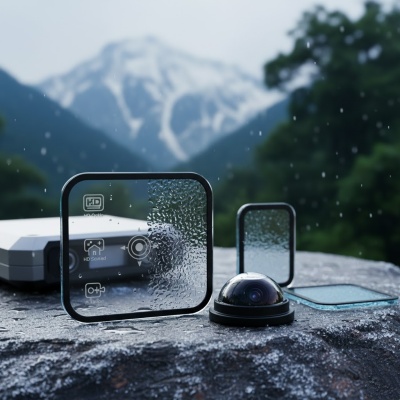
1. Outdoor Smart Devices (Camera Cover Glass, Sensor Glass)
Recommended glass: Tempered or chemically strengthened glass
Performance: Stable down to –60°C; improved resistance to sudden temperature changes
Why: Devices exposed to wind chill and rapid heating (e.g., sunlight, defrost systems) require high thermal shock resistance.
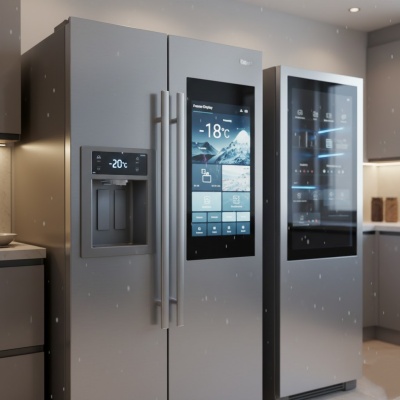
2. Home Appliances (Refrigerator Panels, Freezer Displays)
Recommended glass: Low-expansion borosilicate glass
Performance: Can operate down to –80°C
Why: Appliances in cold-chain logistics or sub-zero environments demand materials with low thermal expansion and consistent clarity.
3. Laboratory & Industrial Equipment (Observation Windows, Instrument Glass)
Recommended glass: Borosilicate or specialty optical glass
Performance: Excellent chemical and thermal stability
Why: Lab environments often experience controlled but extreme temperature variations.
Factors That Influence Low-Temperature Durability
Material composition: Borosilicate performs best due to its low thermal expansion rate.
Glass thickness: Thicker glass resists cracking better, while micro-defects significantly reduce performance.
Installation and environment: Edge polishing and proper mounting help minimize stress concentration.
How to Enhance Low-Temperature Stability
Choose tempered or specialty glass for outdoor or extreme-cold applications.
Avoid sudden temperature changes greater than 5°C per minute (DIN 1249 guideline).
Conduct routine inspections to eliminate risks caused by edge chips or scratches.
Low-temperature resistance is not a fixed property—it depends on the material, structure, and operating environment.
For companies designing products for winter climates, smart homes, industrial equipment, or cold-chain logistics, selecting the right type of glass is essential.
With advanced manufacturing and customizable solutions, specialty glass offers reliable performance even in the harshest conditions.
Custom-made glass for your products? Email us at sales@saideglass.com
#GlassTechnology #TemperedGlass #BorosilicateGlass #CameraCoverGlass #IndustrialGlass #LowTemperaturePerformance #ThermalShockResistance #SmartHomeGlass #ColdChainEquipment #ProtectiveGlass #SpecialtyGlass #OpticalGlass
Post time: Dec-01-2025