


「Part 1」 Introduction
Glass is widely used in architectural glazing, furniture, home appliances, electronic products, display panels and decorative applications. However, not all transparent glass looks exactly the same.
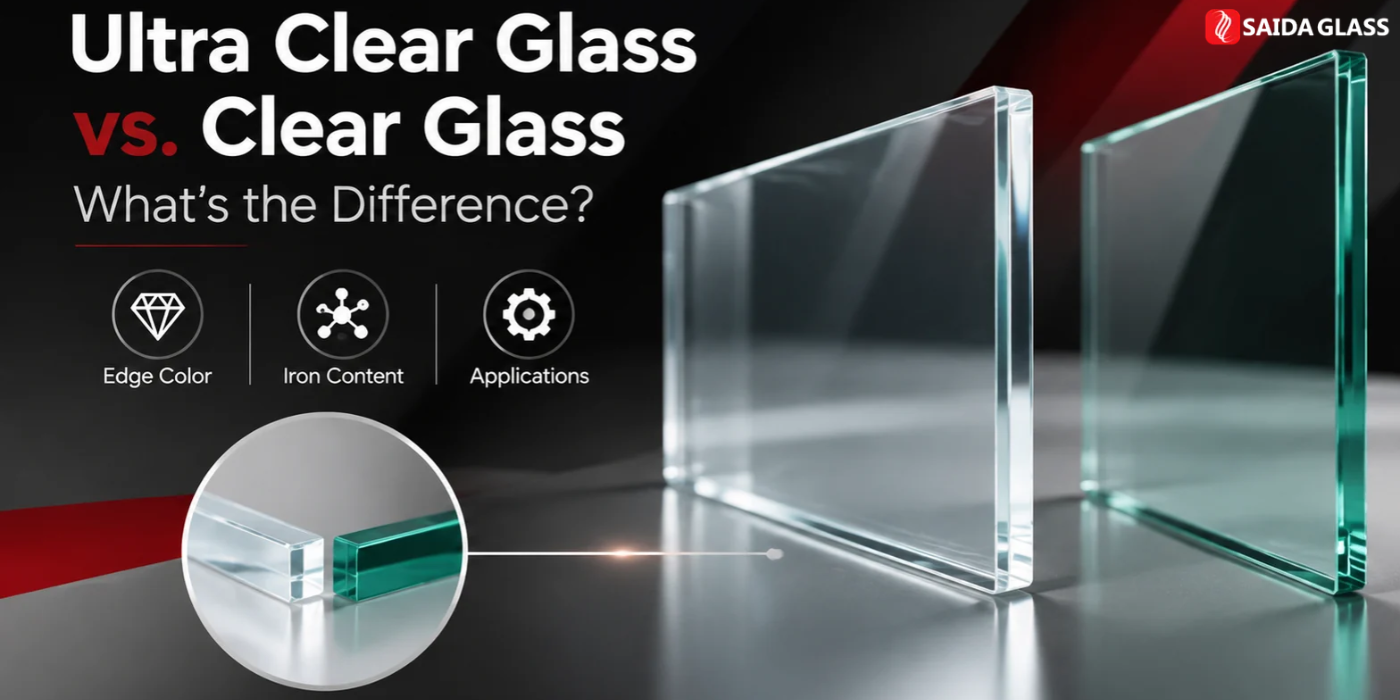
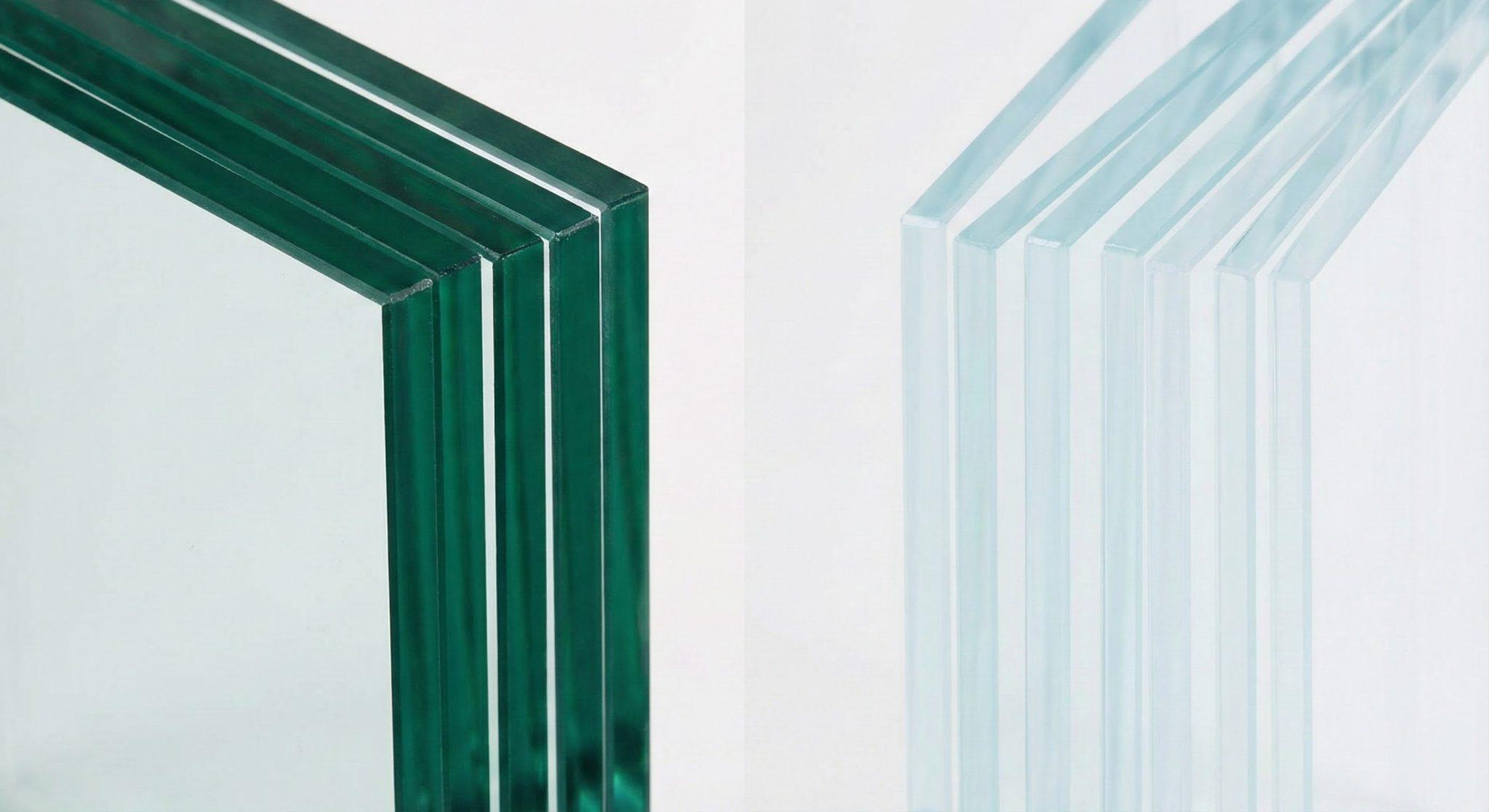
When comparing Ultra Clear Glass and Clear Glass, one of the most noticeable differences is the color visible along the glass edge. Standard Clear Glass typically exhibits a greenish tint, especially when viewed from the side, while Ultra Clear Glass offers a much clearer, more neutral appearance.
This difference is mainly related to the iron content in the glass composition, which affects its light transmission and visible color.
「Part 2」 What Is Ultra Clear Glass and Clear Glass?
Ultra Clear Glass, also known as Low-Iron Glass or Extra Clear Glass, is manufactured using carefully selected raw materials with a significantly reduced iron content. This helps minimize the greenish tint commonly found in standard float glass.
Clear Glass, also known as Standard Clear Float Glass, is the conventional transparent glass produced using the float glass manufacturing process. It naturally contains a certain amount of iron impurities originating from the raw materials.
Although both types of glass are transparent, their chemical composition and optical properties are different.
「Part 3」 Why Do Their Edges Have Different Colors?
The primary reason for the different edge colors is the iron oxide content in the glass.
Iron impurities, particularly iron oxides such as Fe₂O₃ and FeO, influence the absorption of visible light passing through the glass. Their absorption characteristics contribute to the greenish appearance of conventional clear glass.
When light travels through a thicker glass section or along the edge, the optical path becomes longer. The cumulative light absorption makes the green tint more noticeable.
Ultra Clear Glass is produced with a much lower iron content, reducing this selective absorption and resulting in a more neutral, transparent appearance.
3.1 The Role of Iron Oxide
Iron oxide is a naturally occurring impurity in silica sand and other raw materials used in glass manufacturing. Although its content is relatively small, it has a significant influence on the optical properties of glass.
The lower the iron content, the less visible light is absorbed by the glass, resulting in higher light transmission and a more neutral appearance.
3.2 Why Is the Green Color More Visible at the Edge?
When viewed from the front, light passes through the glass thickness once, and the green tint may be difficult to notice.
However, when viewed from the edge, the optical path through the glass can be much longer, depending on the viewing direction and glass geometry. This increases the cumulative effect of light absorption, making the greenish color more apparent.
This is why the difference between standard clear glass and ultra clear glass becomes especially noticeable in thick glass panels, polished edges and laminated glass assemblies.
「Part 4」 Manufacturing Processes
Ultra Clear Glass and Clear Glass are generally produced using the same basic float glass manufacturing technology. The key difference lies in raw material selection, batch composition and process control.
The main manufacturing stages include:
- •Raw Material Selection: High-quality silica sand, soda ash, limestone, dolomite and other raw materials are selected. For ultra clear glass, low-iron raw materials are essential.
- •Batching and Mixing: Raw materials are accurately weighed and mixed according to the required chemical composition.
- •Melting and Refining: The batch is heated at high temperatures to form molten glass, while bubbles and other defects are removed.
- •Float Forming: Molten glass flows onto a molten tin bath, forming a flat and uniform glass ribbon.
- •Annealing: The glass ribbon passes through an annealing lehr to gradually cool and release internal stresses.
- •Cutting and Inspection: The glass is cut into specified sizes and inspected for optical quality, thickness, surface defects and other properties.
| Key Manufacturing Difference | Clear Glass vs Ultra Clear Glass | ||
| Process | Clear Glass | Ultra Clear Glass |
| Raw materials | Conventional raw materials | Carefully selected low-iron materials |
| Iron content | Relatively higher | Significantly lower |
| Melting process | Standard float process | Float process with controlled composition |
| Edge appearance | Greenish | More neutral / clearer |
| Light transmission | Relatively lower | Relatively higher |

「Part 5」 Performance Comparison
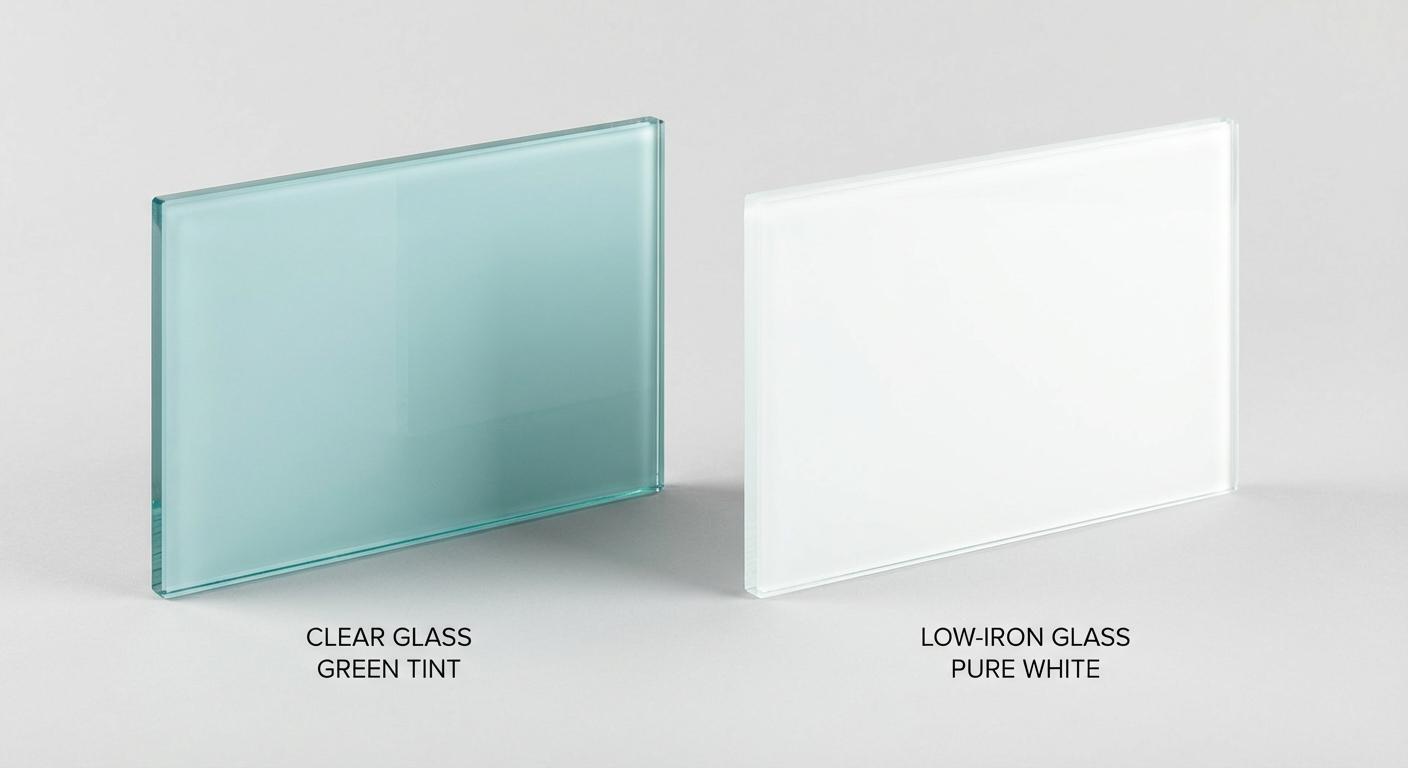
The following table summarizes the main differences between standard clear glass and ultra clear glass.
| Characteristics | Clear Glass | Ultra Clear Glass |
| Iron content | Relatively higher | Much lower |
| Visible appearance | Slight green tint | Nearly color-neutral |
| Edge color | Greenish | Clear / neutral |
| Light transmission | Relatively lower | Generally higher |
| Color reproduction | Slight color influence | More natural |
| Thickness effect | Green tint becomes more visible | Color remains more neutral |
| Cost | Generally lower | Generally higher |
| Further processing | Tempering, laminating, coating | Tempering, laminating, coating |
Technical Note ▚
For reference, the standard clear float glass typically has approximately 89% visible light transmittance at 6 mm thickness, while low-iron glass can achieve approximately 90% or higher at the same thickness.
Actual values vary depending on the manufacturer, glass thickness, composition and testing conditions. These figures should not be treated as universal specifications.
「Part 6」 Further Processing
Both Ultra Clear Glass and Clear Glass can undergo various secondary processing operations to meet different product requirements.
Saida Glass Common processing methods include:
- •Tempering: Improves mechanical strength and thermal resistance, while providing safety benefits when the glass breaks.
- •Lamination: Combines two or more glass sheets using an interlayer, helping hold fragments together after breakage.
- •Edge Processing: Includes grinding, polishing, beveling and other treatments to improve edge quality and appearance.
- •Coating: Includes anti-reflective, anti-fingerprint, anti-glare and other functional coatings, depending on the product requirements.
- •Screen Printing: Applies ceramic frit or decorative patterns to the glass surface.
- •Insulating Glass Assembly: Combines multiple glass panes with a spacer and sealed cavity to provide thermal and acoustic performance.
「Part 7」 How to Choose Between Ultra Clear Glass and Clear Glass?
The choice depends on the product's optical requirements, appearance, application environment and budget.
If you're not sure which glass material would be the good choice for your project, contact Saida Glass to get your glass solutions.
▚ Choose Ultra Clear Glass when:
- •A clean, neutral edge appearance is required.
- •High light transmission is important.
- •Accurate color reproduction is essential.
- •The glass is thick or has exposed polished edges.
- •The product belongs to a premium architectural, decorative or display application.
▚ Choose Clear Glass when:
- •Standard transparency meets the product requirements.
- •The edge color is not a major visual concern.
- •Cost efficiency is a priority.
- •The application does not require exceptionally high optical clarity.
「Part 8」 Important Considerations for Glass Selection
Although Ultra Clear Glass provides better optical clarity, it does not automatically offer higher mechanical strength, hardness or scratch resistance than standard Clear Glass.
Both materials are generally based on soda-lime-silica glass and can offer similar mechanical properties when manufactured to comparable specifications and processed under equivalent conditions.
In addition, the final appearance of a glass product is affected by more than its base glass material. Thickness, edge finishing, lamination interlayers, coatings, lighting conditions and viewing angles can all influence the perceived color.
One important terminology note: In some markets, the term "White Glass" is used interchangeably with "Clear Glass", while in others it may refer to low-iron glass. Therefore, when specifying materials, it is recommended to confirm the iron content, visible light transmittance and optical specifications rather than relying on product names alone.
「Part 9」 Applications and Products
9.1 Ultra Clear Glass Applications
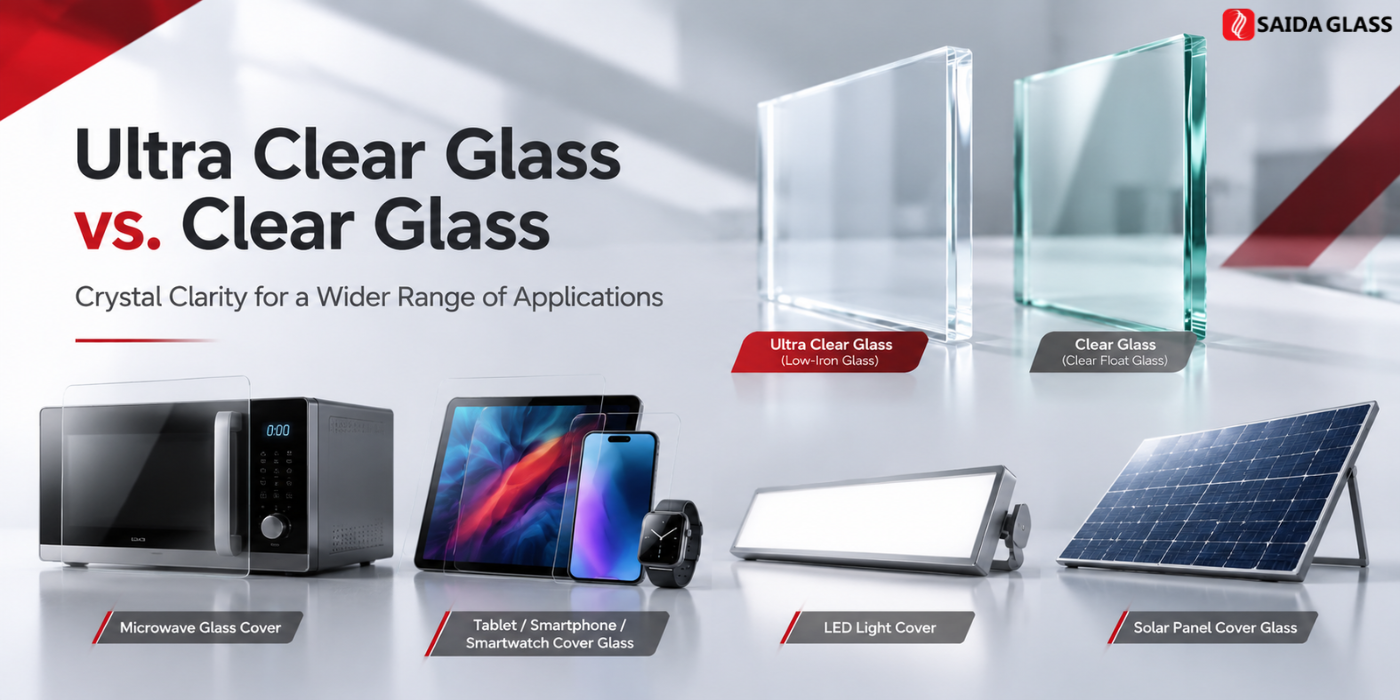
Ultra Clear Glass is particularly suitable for applications where high transparency, color neutrality and premium visual quality are important.
- •Architectural Glass: Glass curtain walls, structural glazing, glass railings, skylights and glass floors.
- •Furniture and Interior Design: Glass tabletops, cabinets, partitions, decorative panels and frameless shower enclosures.
- •Display and Retail: Jewelry showcases, museum display cases, luxury product cabinets and exhibition displays.
- •Solar Energy: Photovoltaic module cover glass and solar thermal applications, where high light transmission is beneficial.
- •Electronics and Optical Products: Display cover glass, optical components and other products requiring improved visual clarity.
9.2 Clear Glass Applications
Standard Clear Glass remains one of the most widely used glass materials due to its good balance of transparency, availability and cost.
- •Construction: Residential windows, doors, interior partitions and general building glazing.
- •Furniture: Standard glass tabletops, shelves, cabinets and decorative components.
- •Home Appliances: Refrigerator shelves, oven viewing windows and other transparent components, subject to the required heat and safety specifications.
- •Automotive and Industrial Products: Selected non-specialized transparent components, subject to applicable safety and optical requirements.
- •General Glass Processing: Tempered glass, laminated glass, insulated glass units, painted glass and other processed glass products.
Post time: Nov-26-2026