



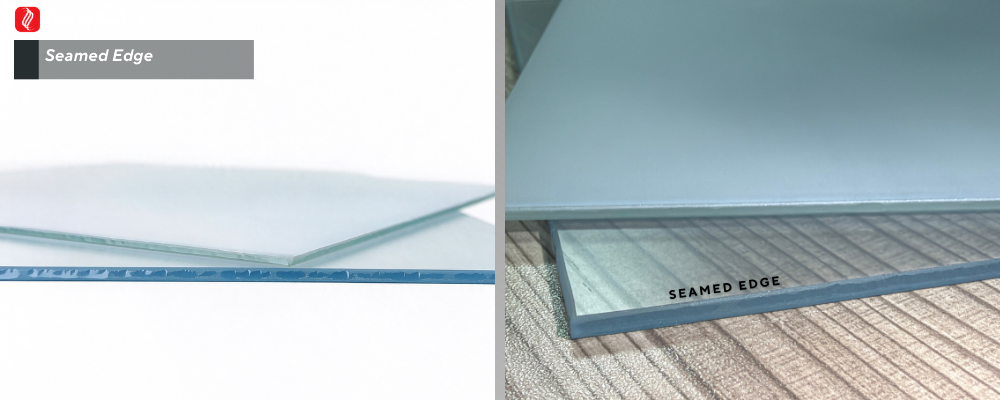
Seam Edge (Safety Seaming)
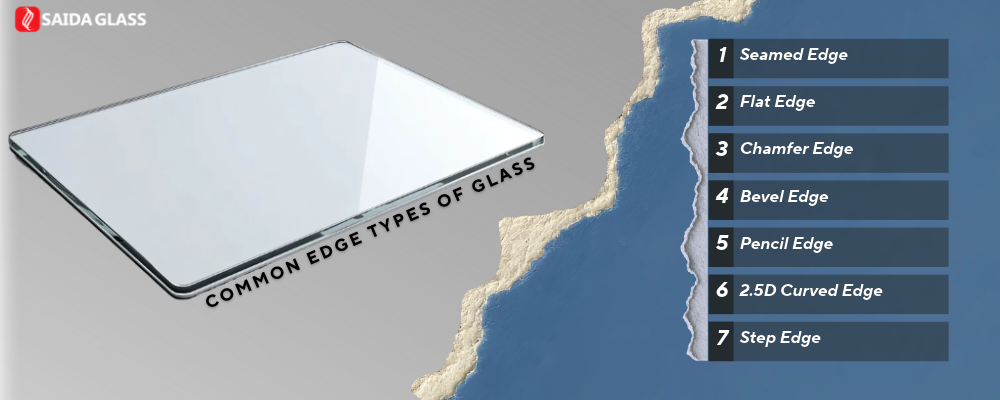
A light grinding process using abrasive belts or wheels to remove sharp arrises from cut glass. It blunts the edges to prevent injury, reduces stress concentration, and lowers the risk of chipping. This is a minimal-removal treatment that preserves the original edge profile.
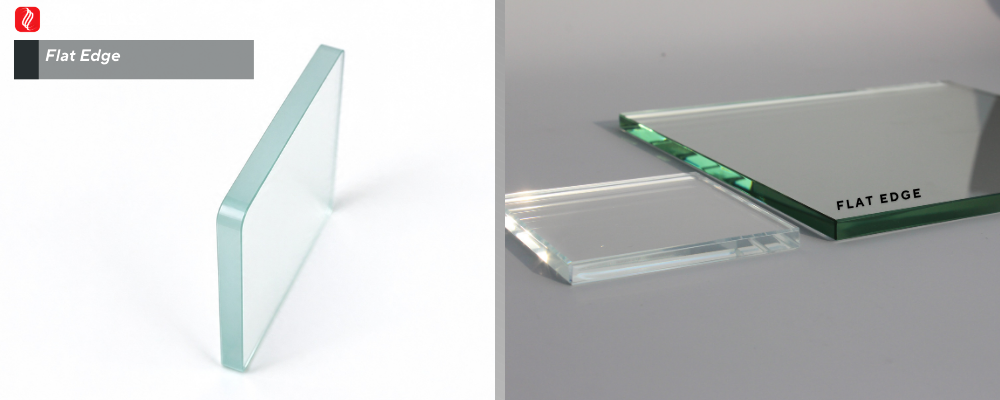
Flat Edge
A flat edge is formed by grinding (and polishing) the cut edge of glass into a flat, right-angled surface perpendicular to the glass faces. Featuring a straight, square profile, this is one of the most basic and widely used edge types in glass fabrication.
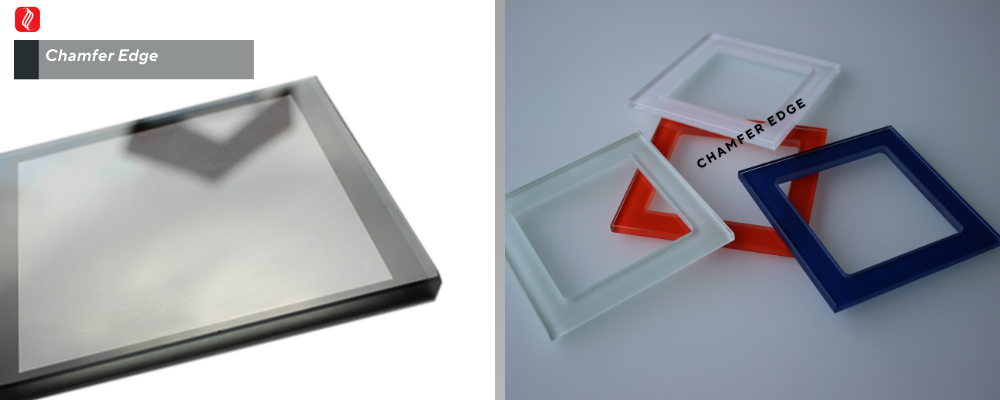
Chamfer Edge
Created by grinding a sloped or angled cut along the glass edge, the chamfer edge eliminates sharp corners to ensure safety and improve visual aesthetics. This finish is typically used on glass edges that are exposed to view.
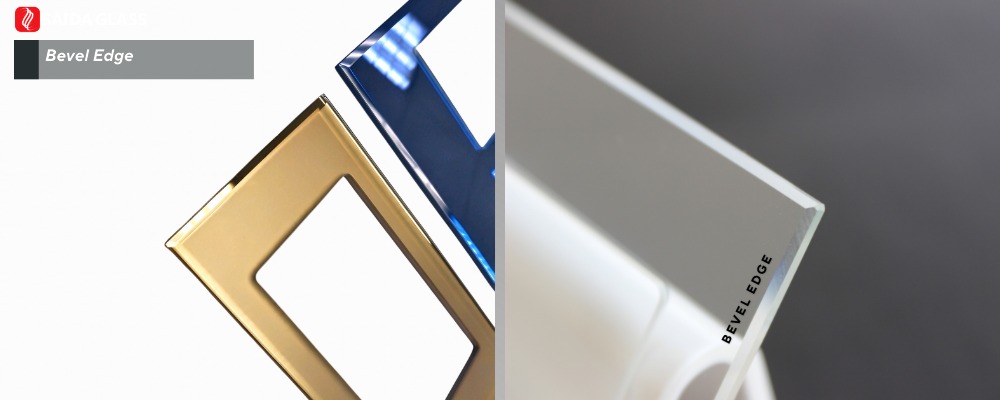
Bevel Edge
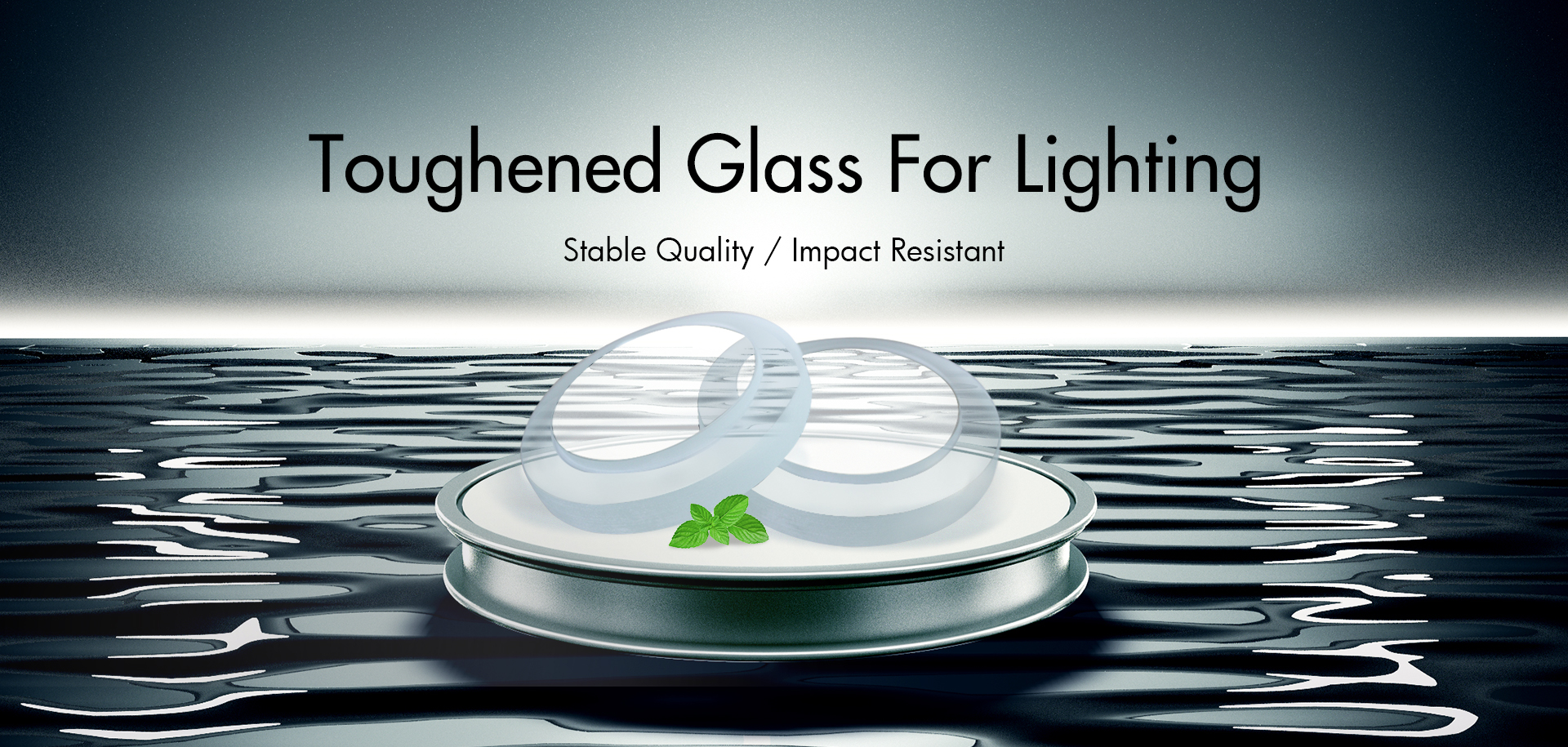
Formed by grinding and polishing a wide, sloped surface along the glass edge, the bevel edge is primarily decorative. This elegant finish is widely used on mirrors, decorative furniture glass, and lighting glass.
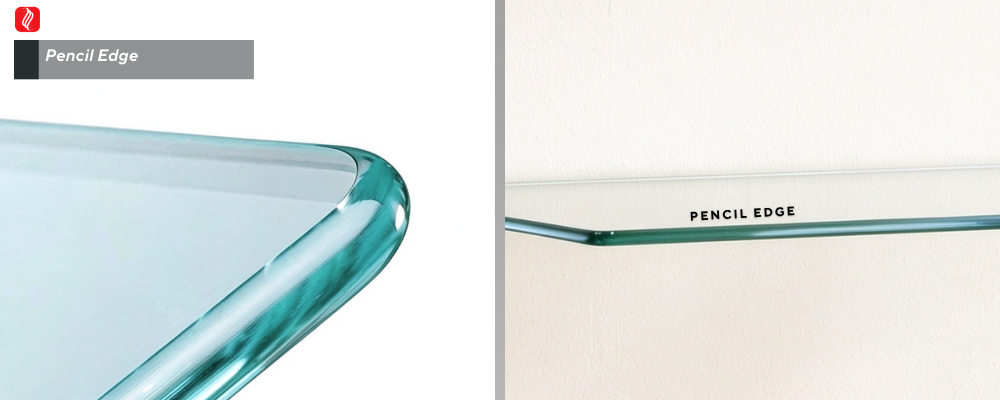
Pencil Edge (C-Edge)
Created by grinding and polishing the glass edge into a rounded, arc-shaped profile, the pencil edge eliminates sharp corners for a smooth and safe finish. This makes it an ideal choice for furniture glass, shelving, and panels that demand a comfortable touch.
- Pencil Polished: Features a rounded edge with a clear, glossy finish, perfect for applications where aesthetics and tactile feel are essential.
- Pencil Ground: Offers a rounded edge with a matte finish at a lower cost, typically used on hidden or non-critical surfaces.
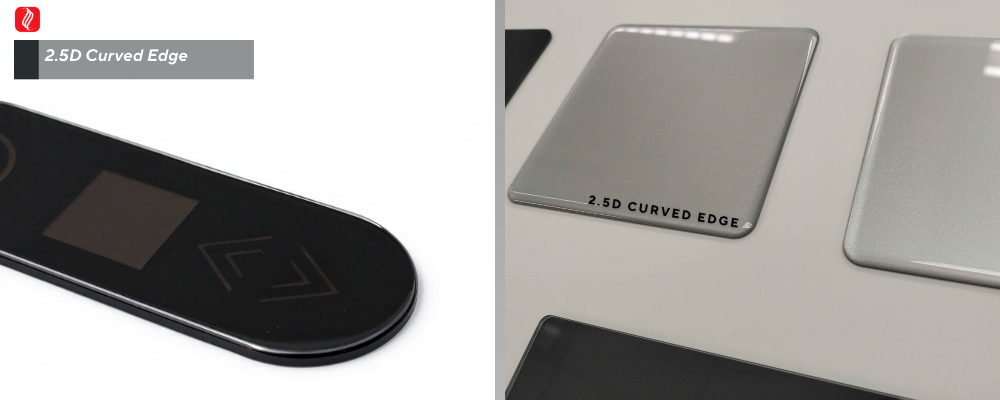
2.5D Curved Edge
Widely recognized as a common yet premium edge-finishing technique for glass cover plates—particularly in smartphones, tablets, and automotive displays—the 2.5D curved edge features a precision-machined, single-curved transition. Unlike simple chamfers or flat bevels, this smooth profile offers a superior tactile feel and enhanced visual aesthetics, while also helping to eliminate micro-cracks and improve overall glass strength.
Pencil Edge vs. Chamfer / Bevel Edge vs. 2.5D Curved Edge: What’s the Difference?
- Pencil Edge: The entire edge features a semi-circular arc with a uniform radius, primarily used for traditional furniture or standard panels.
- Chamfer / Bevel Edge: A straight, angled cut that creates a distinct, sharp-angled profile.
- 2.5D Curved Edge: The edge is a non-uniform, smooth curved surface, typically formed through precision CNC grinding. It emphasizes tactile feel, visual aesthetics, and the elimination of edge micro-cracks to enhance strength. The manufacturing complexity and added value are significantly higher than the previous types.
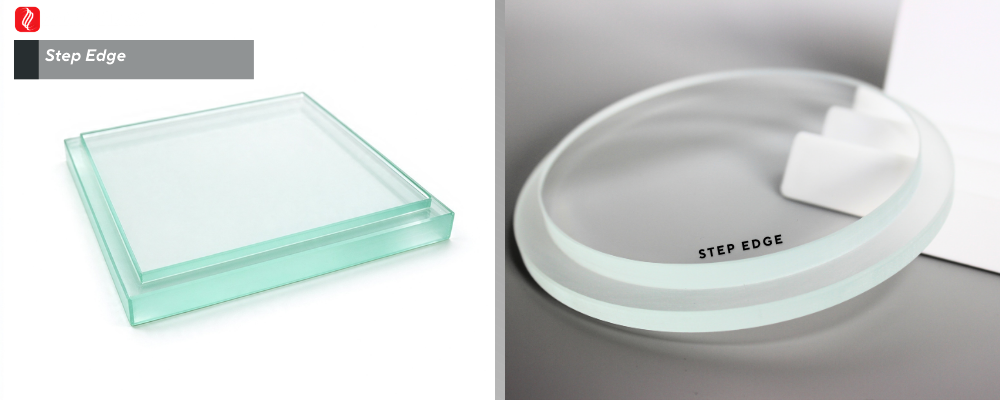
Step Edge
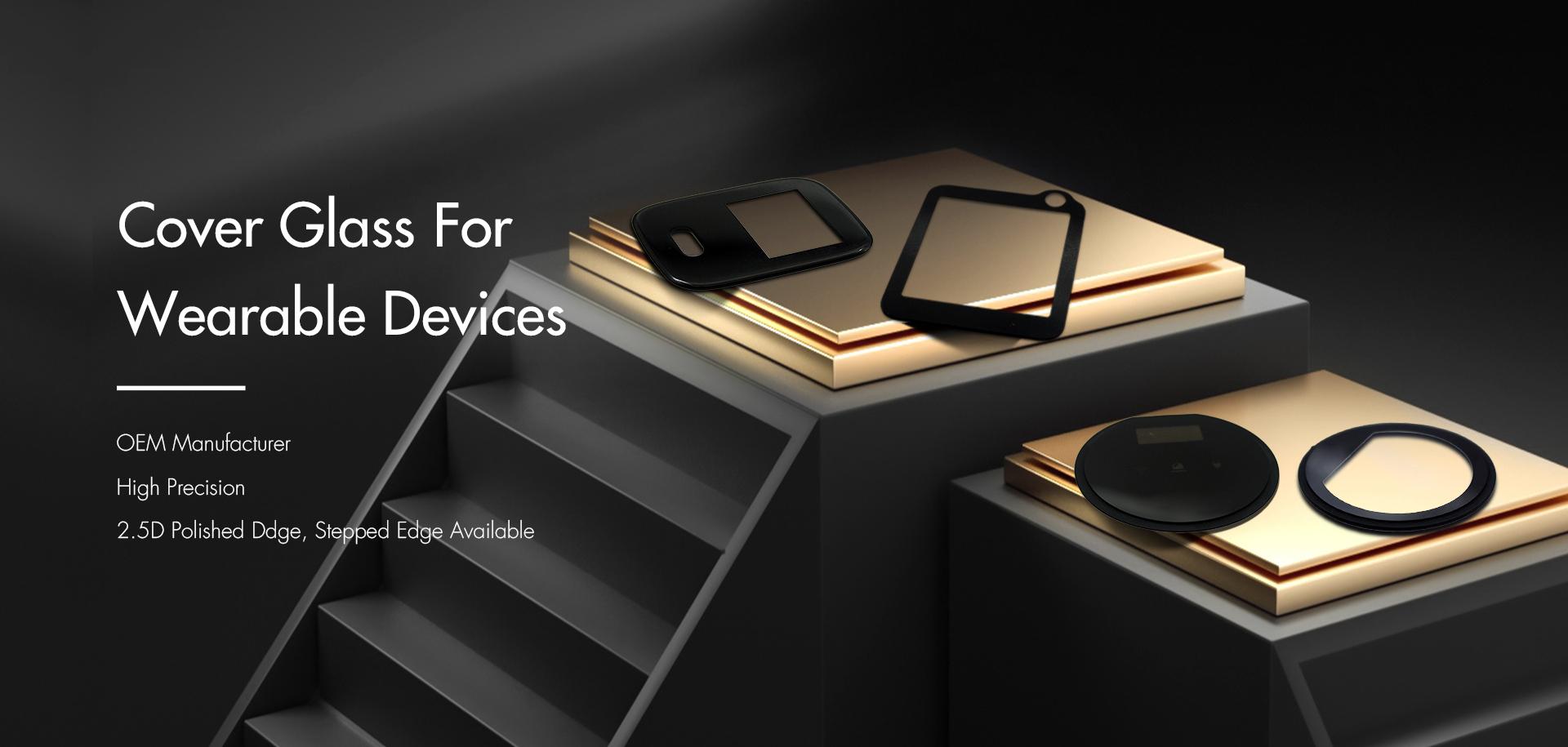
Unlike a simple flat, pencil, or beveled edge, a step edge features a stepped or stair-like profile machined into the glass. It is usually designed for specific assembly purposes—such as fitting into a frame or sitting flush with the enclosure—or functional needs, like creating clearance for display modules underneath. Because of its complex stepped structure, precision CNC grinding is typically required to ensure the exact depth and position of the step.

Smart Devices Protective Glass
AR Touch Screen Panel
AG Touch Screen Panel
AF Touch Screen Panel
Lighting Glass
2.5D Glass For Smart Control Panel
Tempered Glass For Home Appliances
Glass-Ceramic for Cooktops
Post time: Nov-13-2026